


Subscribe to RSS
 Download PDF

DOI: 10.1055/s-0045-1814107
Targeting IGF2BP3 in HNSCC: Identification and Virtual Screening of Inhibitors
Authors
Funding National Natural Science Foundation of China (22307109), Natural Science Foundation of Henan Province (222300420510), Key Research Project Plan for Higher Education Institutions in Henan Province (23A350013), and the Tackle Key Problems in Science and Technology Project of Henan Province, China (242102311226, 242102310417).

Abstract
Background
Resistance to traditional intense chemotherapy and high invasiveness are characteristics of head and neck squamous cell cancer (HNSCC). Numerous human disorders are linked to N6-methyladenosine (m6A) modification of RNA, and the genetic changes in m6A regulatory genes in HNSCC are not well-understood. There is also a pressing need to find efficient targets and inhibitors for the treatment of HNSCC. This investigation examined the RNA m6A alteration in HNSCC and found putative IGFBP3 inhibitors for potential use.
Methods
We examined m6A regulator gene expression data from the public Gene Expression Omnibus (GEO) database in both normal tissues and patient HNSCC. For bioinformatics analysis, the R package and additional tools, including the m6A2Target database, Gene Ontology (GO) functional and Kyoto Encyclopedia of Genes and Genomes (KEGG) pathway analyses, Gene Expression Profiling Interactive Analysis (GEPIA), and Human Protein Atlas, were used to examine the molecular mechanisms and prognostic impact for regulators that are distinctly expressed. Furthermore, TCMBank molecules were employed for virtual screening to find possible inhibitors.
Results
Out of the 151 differentially expressed genes (DEGs) found in the chosen datasets, insulin-like growth factor 2 mRNA-binding protein 3 (IGF2BP3) was the m6A regulator that was elevated in HNSCC. The GO and KEGG analyses revealed that the target genes of IGF2BP3 were mostly enriched in several pathways and activities linked to cancer. In patients with HNSCC, IGF2BP3 showed an effective predictive effect by GEPIA analysis. Virtual screening yielded four traditional Chinese medicine ingredients as putative IGF2BP3 inhibitors for additional research.
Discussion
This work learned the role and prognostic effect of IGF2BP3 in HNSCC; meanwhile, the potential inhibitors of IGF2BP3 were identified for further study.
Keywords
head and neck squamous cell carcinoma - IGF2BP3 - prognosis - inhibitors - virtual screeningIntroduction
Squamous cell carcinoma is the most prevalent type of head and neck cancer, which also includes malignancies of the larynx, throat, lips, mouth, nose, and salivary glands.[1] Human papillomavirus (HPV) infection, heavy alcohol consumption, and tobacco use raise the risk of head and neck squamous cell carcinoma (HNSCC), which is estimated to cause 380,000 deaths globally each year.[2] [3] [4] [5] The prognosis for patients with HNSCC is still not promising, despite recent improvements in diagnosis and treatment approaches.[6]
Malignancies frequently exhibit aberrant gene expression, and the accompanying mRNA changes may play significant roles in the development and spread of malignancies.[7] [8] Recent developments in sequencing technologies have made it possible to comprehend the molecular characteristics of malignancies and create precise, tailored treatment plans based on particular markers. N6-methyladenosine (m6A) modification of RNA is a rapidly developing area of study in posttranscriptional gene regulation. It is extensively found in eukaryotic cells and has drawn attention due to its critical role in numerous biological processes (BPs).[9] [10] [11] [12] The “writers” (methyltransferases), “erasers” (demethylases), and “readers” (methyl-binding proteins) regulate the dynamic and reversible changes that occur during m6A modification.[13] [14] Numerous m6A regulators have been found to be essential for the methylation process of RNA, which impacts RNA functions like translation, stability, transport, degradation, and splicing. Numerous investigations revealed that m6A regulators were connected to the etiology of different types of cancer.[15] Paramasivam et al have reported on the expression of m6A regulators and their predictive significance in HNSCC.[16] Liu's team revealed that an eight-gene prognostic signature was a helpful tool for assessing prognosis and enabling individualized care for patients with HNSCC.[17] According to Heng's group, ALKBH1 can stop tumor cell growth by preventing HNSCC from expressing DDX18.[18] The foregoing results might offer a fresh perspective on how m6A is modified in HNSCC, but the molecular mechanisms underlying important m6A regulators remain mostly unknown, and the development of suitable inhibitors is necessary to treat the malignancy.
Natural compounds are characterized by a remarkable diversity of chemical scaffolds and distinct bioactivity profiles, rendering them suitable for therapeutic applications or as valuable lead compounds for the development of novel and potent bioactive agents.[19] Currently, several plant-derived antitumor drugs are widely used in clinical practice, including taxanes,[20] homoharringtonine,[21] vinblastine, vincristine,[22] and podophyllotoxin[23] analogues. Many of these medicinal plants originate from China and are recognized in traditional Chinese medicine (TCM). The reported findings have inspired further exploration of novel chemical structures for cancer therapy, and promising progress has been achieved. However, the application of TCM ingredients in the treatment of HNSCC remains largely unexplored.
In this study, we aimed to assess the expression pattern of m6A regulators in human HNSCC tissues using the publicly available dataset. To build a comprehensive picture of m6A regulators in HNSCC, additional bioinformatics analyses were performed, such as differential expression, functional enrichment analysis, and target gene prediction, to identify new targets for the early diagnosis and treatment of HNSCC. After insulin-like growth factor 2 mRNA-binding protein 3 (IGF2BP3) was identified as a significant m6A regulator associated with HNSCC that has a prognostic impact, virtual screening against TCM ingredients was performed to identify possible IGF2BP3 inhibitors for cancer treatment. Our study may offer hints for further investigations into the molecular mechanism of epigenetic changes in HNSCC.
Methods
Data Collection and Screening of Head and Neck Squamous Cell Cancer-Related N6-Methyladenosine Regulators
The mRNA expression profiling dataset GSE6631 (human), which included paired HNSCC tumor and normal samples from 22 patients, was downloaded from the Gene Expression Omnibus (GEO) database.[24]
The “limma” R package was used to identify the differentially expressed genes (DEGs) with a statistical criterion of |log2 fold change| >2 and p < 0.05. The expression of DEGs was then visualized using a volcano plot, and the DEGs in normal tissues and HNSCC were displayed using a heatmap diagram.
At that moment, 17 genes were considered to be common m6A RNA methylation regulators, including ALKBH5, FTO, HNRNPA2B1, HNRNPC, IGF2BP1, IGF2BP2, IGF2BP3, METTL14, METTL3, RBM15, RBM15B, RBMX, YTHDC1, YTHDC2, YTHDF1, YTHDF2, and YTHDF3. The differentially expressed m6A regulatory genes (DEMRGs), which were identified as important m6A regulators linked to HNSCC, were the genes that overlapped with DEGs and these m6A regulators. The expression of m6A regulators in HNSCC and normal tissues was then shown using a heatmap diagram and box plot.
Functional Annotation of Head and Neck Squamous Cell Cancer-Related N6-Methyladenosine Regulators
The target genes of DEMRGs were predicted using the m6A2Target database ( http://m6a2target.canceromics.org). It was determined that the genes derived from the projected targets were target genes altered by important m6A regulators linked to HNSCC. Then, using the R package's “clusterProfiler,” we conducted Kyoto Encyclopedia of Genes and Genomes (KEGG) pathway analysis and Gene Ontology (GO) enrichment analysis, which included terms of BPs, cellular components (CCs), and molecular functions (MFs). The padjust and q-value less than 0.05 were regarded as significant categories.
Prognostic Effect and the Expression of Differentially Expressed m6A Regulatory Gene
Gene Expression Profiling Interactive Analysis (GEPIA; http://gepia.cancer-pku.cn/), an online database that contains gene expression profiles and survival data of cancer patients, was used to assess the predictive values of IGF2BP3 in HNSCC patients. The Human Protein Atlas ( https://www.proteinatlas.org/) was used to evaluate the expression of the GF2BP3 protein in HNSCC tissue.
Virtual Screening of IGF2BP3 Inhibitors
To find possible inhibitors that target the desired protein, virtual screening is a dependable method.[25] To explore possible IGF2BP3 inhibitors for additional research, Autodock Vina was used for virtual screening.[26] A library of TCM ingredients ( https://tcmbank.cn/Download) was used for the screening process. In molecular docking, the crystal structure of IGF2BP3 in complex with RNA (ACAC) was downloaded from RCSB ( www.rcsb.org; pdb: 6GX6).[27] For docking, the ligand's binding site (ACAC) served as the binding pocket; the grid's dimensions were 45 * 45 * 45 Å3, and its central coordinates were X = − 16.215, Y = 60.559, and Z = − 5.436. There were 20 conformations produced for every ligand during the docking process. Following docking, the 500 compounds with the best scores were chosen for manual investigation to identify putative inhibitors of IGF2BP3.
Results
Identification of Key Head and Neck Squamous Cell Cancer-Related N6-Methyladenosine Regulators
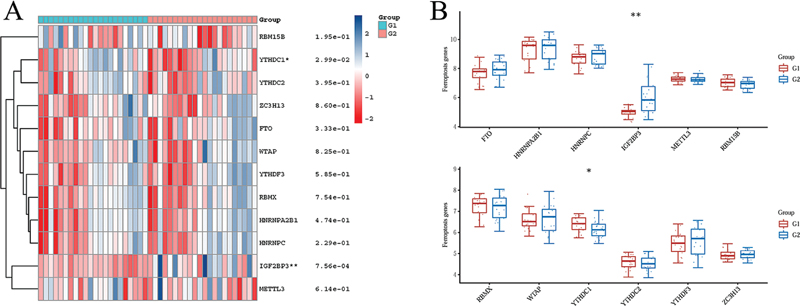
The volcano plot and DEG heatmap ([Fig. 1]) illustrate the results of the gene expression study between HNSCC tissues and controls based on the GSE6631 dataset. [Fig. 2] displays the m6A regulators' expression pattern. The results revealed that only one m6A regulator (IGF2BP3) was differentially expressed between HNSCC and control tissues. IGF2BP3 was upregulated in HNSCC compared with normal tissues.

Potential Functions of IGF2BP3 and Target Genes
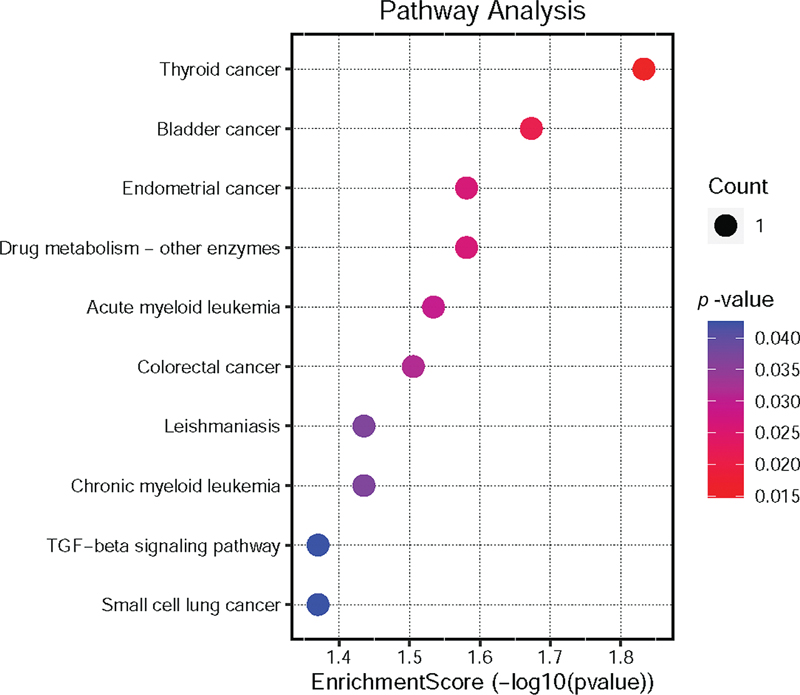
Four genes found to be verified targets of IGF2BP3 (FSCN1, MARCKSL1, MYC, and TK1) were chosen by M6A2Target searches. Furthermore, to interpret the clustering results from the standpoint of basic BPs, GO and KEGG analyses were conducted on these genes.
With the inclusion of terms associated with MFs, BPs, and CCs, GO analysis identified the highly enriched phrases ([Fig. 3]). Terms related to DNA biosynthesis, cell proliferation in the development of metanephros, and control over the maintenance of somatic stem cell populations were substantially enriched for BP. The terms that were most relevant to CC were contractile actin filament bundle, actin filament bundle, podosome, stress fiber, and invadopodium. Furthermore, the primary roles of the proteins encoded by the genes for category MF were nucleobase-containing compound kinase activity, mRNA 5′-UTR binding, actin filament binding, and actin binding. The TGF-β signaling pathway, drug metabolism—other enzymes, and several cancer types were all abundant in these altered genes, according to the KEGG data ([Fig. 4]).

Prognostic Effect and the Expression of Differentially Expressed N6-Methyladenosine Regulatory Gene
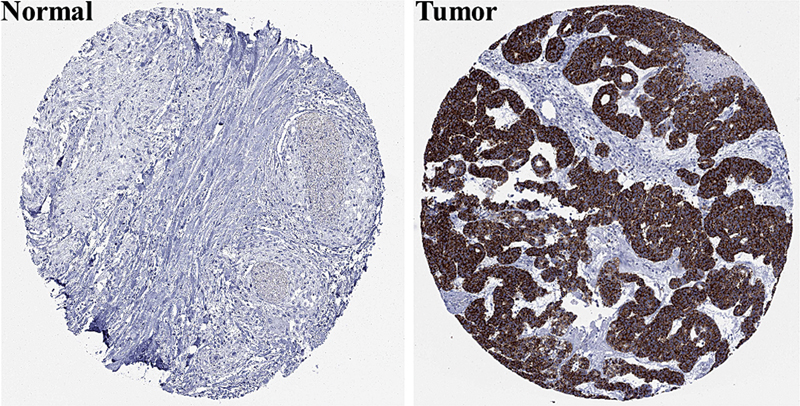
IGF2BP3 was found to have predictive significance with HNSCC based on an analysis of the online database GEPIA ([Fig. 5]). The Human Protein Atlas was used to examine the expression of the GF2BP3 protein in HNSCC tissue, and the findings indicated that the GF2BP3 level in HNSCC was greater than that in normal tissue ([Fig. 6]).

Virtual Screening of IGF2BP3 Inhibitors
Since there were no IGF2BP3 inhibitors available for anticancer research and the aforementioned study suggested that IGF2BP3 might be a therapeutic target for HNSCC, a virtual screening study was performed to identify possible IGF2BP3 inhibitors for additional study.
After virtual screening, the top ranked 500 molecules were selected for manual observation according to docking scores and binding modes. After manual selection, four molecules ([Fig. 7]) were selected as potential active molecules for further study.

By examining the binding modes of the four molecules to IGF2BP3 ([Fig. 8]), it can be observed that each compound fits well into the binding site and exhibits favorable binding interactions. Lapathoside A formed eight hydrogen bonds with residues TYR39, SER73, VAL74, LYS76, ARG77, ARG79, and TYR153 of IGF2BP3. In addition, a π–π interaction with PHE41 and a cation–π interaction with ARG77 were observed. Methyl protogracillin established eight hydrogen bonds with ASP43, SER73, VAL74, ARG79, ARG133, and TYR153. Scabrans G5 formed six hydrogen bonds with TYR5, HIS72, SER73, VAL74, and ARG79, along with a sigma–π (σ–π) interaction involving TYR5. Tetragalloyglucose engaged in nine hydrogen bonds with TYR5, SER73, VAL74, ARG133, and TYR153, as well as a π–π interaction with TYR5 and a cation–π interaction with ARG79.

Discussion
Much attention has been paid to m6A RNA methylation as a component in the regulation of gene expression.[28] In recent years, m6A regulators have been found to significantly influence the occurrence, progression, and prognosis of various disorders. The study of m6A regulators in HNSCC is still in its early stages, although the significant role of m6A alteration in several human diseases has been discovered.
Among the 17 common m6A RNA methylation regulators identified in this study, along with the DEGs in normal and HNSCC tissues, IGF2BP3 was found to be overexpressed in HNSCC.
IGF2BP3 belongs to a family of m6A readers named insulin-like growth factor 2 mRNA-binding proteins (IGF2BPs; IGF2BP1, IGF2BP2, and IGF2BP3). The conserved family with single-stranded RNA-binding proteins known as IGF2BPs is involved in several phases of RNA processing, such as translation, localization, and mRNA stability.[29]
Recently, IGF2BP3 was reported as a critical gene in non-small cell lung cancer,[30] leukemogenesis,[31] B-cell acute lymphoblastic,[32] cervical cancer,[33] renal clear cell carcinoma,[34] colorectal cancer,[35] bladder cancer,[36] colon cancer,[37] and breast cancer.[38] However, the role of IGF2BP3 in HNSCC needs further investigation.[39]
The current study set out to ascertain the frequency and prognostic significance of the DEGs of m6A regulatory genes in HNSCC. The findings demonstrate that IGF2BP3 was elevated and had a predictive impact on HNSCC. IGF2BP3 and the target genes were found to be highly associated with various malignancies by GO and KEGG analyses.
This study suggests that IGF2BP3 may serve as a therapeutic target for HNSCC. To the best of our knowledge, no IGF2BP3 inhibitors have been available for mechanistic investigation. Although significant advances have been made in the use of natural products for cancer treatment,[40] the application of TCM ingredients in HNSCC remains largely unexplored. In this study, we aimed to identify potential IGF2BP3 inhibitors through virtual screening. Four molecules were selected as promising candidates for further development. Among them, lapathoside A is a phenylpropanoid ester derived from Dockleaved Knotweed (Yu Liao) and Polygonum lapathifolium. It has demonstrated potent anticancer activity against pancreatic cancer and skin tumor.[41] [42] Combined with the molecular modeling results from this study, these reported activities strongly suggest lapathoside A as a promising lead compound for the design of IGF2BP3 inhibitors. Methyl protogracillin, a furostanol saponin isolated from the rhizome of Dioscorea collettii var. hypoglauca, is used in TCM for the treatment of cervical carcinoma, urinary bladder carcinoma, and renal tumor.[43] It exhibits broad cytotoxic activity against solid tumor cell lines, indicating its potential as a candidate molecule for HNSCC therapy. Scabrans G5 was isolated from the rhizomes and roots of Gentiana scabra,[44] a traditional medicinal plant known for its anti-inflammatory and analgesic properties.[45] Based on its binding mode and affinity observed in this study, Scabrans G5 represents a potential IGF2BP3 inhibitor, which may facilitate the application of G. scabra-derived compounds as IGF2BP3-targeted agents. Poria cocos, a fungus used in TCM, has been widely used in cancer treatment. Its main active components, such as triterpenes and polysaccharides, exert extensive pharmacological effects by inhibiting the proliferation of malignant tumors, including HNSCC subtypes like nasopharyngeal carcinoma and tongue squamous cell carcinoma.[46] In this work, tetragalloyglucose, a constituent of Poria cocos, was identified as a potential IGF2BP3 inhibitor, which may reveal a possible target and mechanism of action underlying the bioactivities of Poria cocos.
Conclusion
Several bioinformatics techniques were used to examine the gene expression and potential roles of m6A regulators in human HNSCC, which identified IGF2BP3 as a crucial regulator. IGF2BP3's regulatory networks and prognostic impact were examined, and virtual screening was used to find possible inhibitors. The current work opens the door for further investigations into the pathogenic mechanisms of HNSCC and for the development of innovative treatment approaches that target IGF2BP3.
Conflict of Interest
The authors declare no conflict of interest.
CRediT Authorship Contribution Statement
Guoyi Yan: Conceptualization, writing original draft, funding acquisition, project administration, and writing-review and editing. Ge Liu: Writing original draft. Wei Zhao: Conceptualization, investigation, and methodology. Zhenjiang Qiu: Conceptualization, funding acquisition, and investigation. Mingyuan Wu: Conceptualization, and supervision. Mengyao Luo: Investigation, and methodology. Shuyi Yan: Investigation, and methodology. Yange Xing: Investigation, and methodology. Muhammad Noman Khan: Investigation, and methodology. Shouhu Li: Conceptualization, writing original draft, funding acquisition, and writing-review and editing. Yonghua Qi: Conceptualization, writing original draft, funding acquisition, and writing-review and editing.
-
References
- 1 Mody MD, Rocco JW, Yom SS, Haddad RI, Saba NF. Head and neck cancer. Lancet 2021; 398 (10318): 2289-2299
- 2 Dai Y, Wang Z, Xia Y. et al. Integrative single-cell and bulk transcriptomes analyses identify intrinsic HNSCC subtypes with distinct prognoses and therapeutic vulnerabilities. Clin Cancer Res 2023; 29 (15) 2845-2858
- 3 Ma DJ, Van Abel KM. Treatment de-intensification for HPV-associated oropharyngeal cancer: a definitive surgery paradigm. Semin Radiat Oncol 2021; 31 (04) 332-338
- 4 Cheng AJ, You GR, Lee CJ. et al. Systemic investigation identifying salivary miR-196b as a promising biomarker for early detection of head-neck cancer and oral precancer lesions. Diagnostics (Basel) 2021; 11 (08) 1411
- 5 Miyauchi S, Kim SS, Pang J. et al. Immune modulation of head and neck squamous cell carcinoma and the tumor microenvironment by conventional therapeutics. Clin Cancer Res 2019; 25 (14) 4211-4223
- 6 Kordbacheh F, Farah CS. Molecular pathways and druggable targets in head and neck squamous cell carcinoma. Cancers (Basel) 2021; 13 (14) 3453
- 7 Lu Y, Li W, Liu G. et al. Identification of critical pathways and potential therapeutic targets in poorly differentiated duodenal papilla adenocarcinoma. Cancer Cell Int 2021; 21 (01) 9
- 8 Liu ZS, Jing CL. A novel risk prediction model of pyroptosis-related genes for the prognosis and immunotherapy response of endometrial cancer. Eur Rev Med Pharmacol Sci 2022; 26 (07) 2259-2278
- 9 Wang GJ, Zhou JH, Fang Y. Study on the common intervention mechanism and active components of Yadanzi against esophageal cancer and gastric cancer and liver cancer and lung cancer based on network pharmacology and molecular docking. Henan Trad Chin Med 2025; 45 (07) 1056-1063
- 10 Liu Y, Yang D, Liu T, Chen J, Yu J, Yi P. N6-methyladenosine-mediated gene regulation and therapeutic implications. Trends Mol Med 2023; 29 (06) 454-467
- 11 Li T, Wang T, Jing J, Sun L. Expression pattern and clinical value of key m6A RNA modification regulators in abdominal aortic aneurysm. J Inflamm Res 2021; 14: 4245-4258
- 12 Huang H, Weng H, Chen J. M(6)a modification in coding and non-coding RNAs: roles and therapeutic implications in cancer. Cancer Cell 2020; 37 (03) 270-288
- 13 Zaccara S, Ries RJ, Jaffrey SR. Reading, writing and erasing mRNA methylation. Nat Rev Mol Cell Biol 2019; 20 (10) 608-624
- 14 Yang Y, Hsu PJ, Chen YS, Yang YG. Dynamic transcriptomic m6A decoration: Writers, erasers, readers and functions in RNA metabolism. Cell Res 2018; 28 (06) 616-624
- 15 Deng X, Su R, Weng H, Huang H, Li Z, Chen J. RNA N6-methyladenosine modification in cancers: current status and perspectives. Cell Res 2018; 28 (05) 507-517
- 16 Paramasivam A, George R, Priyadharsini JV. Genomic and transcriptomic alterations in m6A regulatory genes are associated with tumorigenesis and poor prognosis in head and neck squamous cell carcinoma. Am J Cancer Res 2021; 11 (07) 3688-3697
- 17 Liu B, Su Q, Ma J. et al. Prognostic value of eight-gene signature in head and neck squamous carcinoma. Front Oncol 2021; 11: 657002
- 18 Guo C, Liu Z, Zhang H. DNA 6mA demethylase ALKBH1 regulates DDX18 expression to promote proliferation of human head and neck squamous cell carcinoma. Cell Oncol (Dordr) 2023; 46 (04) 1097-1111
- 19 Melfi F, Carradori S, Mencarelli N. et al. Natural products as a source of new anticancer chemotypes. Expert Opin Ther Pat 2023; 33 (11) 721-744
- 20 Mosca L, Ilari A, Fazi F, Assaraf YG, Colotti G. Taxanes in cancer treatment: Activity, chemoresistance and its overcoming. Drug Resist Updat 2021; 54: 100742
- 21 Razzaq A, Rather BA, Zahra LT. et al. Cephalotaxus-derived homoharringtonine: biosynthesis, mechanism of action, and role in modern cancer therapy. Biotechnol J 2025; 20 (09) e70122
- 22 Dhyani P, Quispe C, Sharma E. et al. Anticancer potential of alkaloids: a key emphasis to colchicine, vinblastine, vincristine, vindesine, vinorelbine and vincamine. Cancer Cell Int 2022; 22 (01) 206
- 23 Motyka S, Jafernik K, Ekiert H. et al. Podophyllotoxin and its derivatives: Potential anticancer agents of natural origin in cancer chemotherapy. Biomed Pharmacother 2023; 158: 114145
- 24 Kuriakose MA, Chen WT, He ZM. et al. Selection and validation of differentially expressed genes in head and neck cancer. Cell Mol Life Sci 2004; 61 (11) 1372-1383
- 25 Shoichet BK. Virtual screening of chemical libraries. Nature 2004; 432 (7019) 862-865
- 26 Eberhardt J, Santos-Martins D, Tillack AF, Forli S. AutoDock vina 1.2.0: new docking methods, expanded force field, and Python bindings. J Chem Inf Model 2021; 61 (08) 3891-3898
- 27 Jia M, Gut H, Chao JA. Structural basis of IMP3 RRM12 recognition of RNA. RNA 2018; 24 (12) 1659-1666
- 28 Li LL, Wu Q, Lv QY. et al. Discussion on scientific connotation of treating atherosclerosis from perspective of phlegm and blood stasis based on m6A methylation. Acta Chin Med 2023; 38 (11) 2301-2305
- 29 Du QY, Zhu ZM, Pei DS. The biological function of IGF2BPs and their role in tumorigenesis. Invest New Drugs 2021; 39 (06) 1682-1693
- 30 Lin Z, Li J, Zhang J. et al. Metabolic reprogramming driven by IGF2BP3 promotes acquired resistance to EGFR inhibitors in non-small cell lung cancer. Cancer Res 2023; 83 (13) 2187-2207
- 31 Tran TM, Philipp J, Bassi JS. et al. The RNA-binding protein IGF2BP3 is critical for MLL-AF4-mediated leukemogenesis. Leukemia 2022; 36 (01) 68-79
- 32 Mäkinen A, Nikkilä A, Haapaniemi T. et al. IGF2BP3 associates with proliferative phenotype and prognostic features in B-cell acute lymphoblastic leukemia. Cancers (Basel) 2021; 13 (07) 1505
- 33 Zhu J, Han S. Downregulation of LncRNA DARS-AS1 inhibits the tumorigenesis of cervical cancer via inhibition of IGF2BP3 . OncoTargets Ther 2021; 14: 1331-1340
- 34 Xie X, Lin J, Fan X. et al. LncRNA CDKN2B-AS1 stabilized by IGF2BP3 drives the malignancy of renal clear cell carcinoma through epigenetically activating NUF2 transcription. Cell Death Dis 2021; 12 (02) 201
- 35 Huang YY, Zhang CM, Dai YB. et al. USP11 facilitates colorectal cancer proliferation and metastasis by regulating IGF2BP3 stability. Am J Transl Res 2021; 13 (02) 480-496
- 36 Huang W, Zhu L, Huang H, Li Y, Wang G, Zhang C. IGF2BP3 overexpression predicts poor prognosis and correlates with immune infiltration in bladder cancer. BMC Cancer 2023; 23 (01) 116
- 37 Liu X, He H, Zhang F. et al. m6A methylated EphA2 and VEGFA through IGF2BP2/3 regulation promotes vasculogenic mimicry in colorectal cancer via PI3K/AKT and ERK1/2 signaling. Cell Death Dis 2022; 13 (05) 483
- 38 Wan W, Ao X, Chen Q. et al. METTL3/IGF2BP3 axis inhibits tumor immune surveillance by upregulating N6-methyladenosine modification of PD-L1 mRNA in breast cancer. Mol Cancer 2022; 21 (01) 60
- 39 Liu X, Chen J, Chen W, Xu Y, Shen Y, Xu X. Targeting IGF2BP3 in cancer. Int J Mol Sci 2023; 24 (11) 9423
- 40 Naeem A, Hu P, Yang M. et al. Natural products as anticancer agents: current status and future perspectives. Molecules 2022; 27 (23) 8367
- 41 Kang MS, Ham YM, Oh DJ, Jung YH, Han SI, Kim JH. Lapathoside a isolated from Fagopyrum esculentum induces apoptosis in human pancreatic cancer cells. Anticancer Res 2021; 41 (02) 747-756
- 42 Takasaki M, Konoshima T, Kuroki S, Tokuda H, Nishino H. Cancer chemopreventive activity of phenylpropanoid esters of sucrose, vanicoside B and lapathoside A, from Polygonum lapathifolium. Cancer Lett 2001; 173 (02) 133-138
- 43 Hu K, Yao X. Methyl protogracillin (NSC-698792): the spectrum of cytotoxicity against 60 human cancer cell lines in the National Cancer Institute's anticancer drug screen panel. Anticancer Drugs 2001; 12 (06) 541-547
- 44 Kakuda R, Iijima T, Yaoita Y, Machida K, Kikuchi M. Secoiridoid glycosides from Gentiana scabra. J Nat Prod 2001; 64 (12) 1574-1575
- 45 Yu Y, Jiang X, Li R, Xiang G, Zhang Y. Study on the anti-inflammatory effect of gentiana scabra bunge extract and its mechanism using zebrafish and RAW264.7 cell models. Biomed Chromatogr 2025; 39 (05) e70050
- 46 Liu SY, Liu J, Cheng B. et al. Antitumor of main active components of Poria: A review. Zhongguo Shiyan Fangjixue Zazhi 2023; 29 (05) 257-263
Address for correspondence
Publication History
Received: 28 June 2025
Accepted: 12 August 2025
Article published online:
30 December 2025
© 2025. The Author(s). This is an open access article published by Thieme under the terms of the Creative Commons Attribution License, permitting unrestricted use, distribution, and reproduction so long as the original work is properly cited. (https://creativecommons.org/licenses/by/4.0/)
Georg Thieme Verlag KG
Oswald-Hesse-Straße 50, 70469 Stuttgart, Germany
-
References
- 1 Mody MD, Rocco JW, Yom SS, Haddad RI, Saba NF. Head and neck cancer. Lancet 2021; 398 (10318): 2289-2299
- 2 Dai Y, Wang Z, Xia Y. et al. Integrative single-cell and bulk transcriptomes analyses identify intrinsic HNSCC subtypes with distinct prognoses and therapeutic vulnerabilities. Clin Cancer Res 2023; 29 (15) 2845-2858
- 3 Ma DJ, Van Abel KM. Treatment de-intensification for HPV-associated oropharyngeal cancer: a definitive surgery paradigm. Semin Radiat Oncol 2021; 31 (04) 332-338
- 4 Cheng AJ, You GR, Lee CJ. et al. Systemic investigation identifying salivary miR-196b as a promising biomarker for early detection of head-neck cancer and oral precancer lesions. Diagnostics (Basel) 2021; 11 (08) 1411
- 5 Miyauchi S, Kim SS, Pang J. et al. Immune modulation of head and neck squamous cell carcinoma and the tumor microenvironment by conventional therapeutics. Clin Cancer Res 2019; 25 (14) 4211-4223
- 6 Kordbacheh F, Farah CS. Molecular pathways and druggable targets in head and neck squamous cell carcinoma. Cancers (Basel) 2021; 13 (14) 3453
- 7 Lu Y, Li W, Liu G. et al. Identification of critical pathways and potential therapeutic targets in poorly differentiated duodenal papilla adenocarcinoma. Cancer Cell Int 2021; 21 (01) 9
- 8 Liu ZS, Jing CL. A novel risk prediction model of pyroptosis-related genes for the prognosis and immunotherapy response of endometrial cancer. Eur Rev Med Pharmacol Sci 2022; 26 (07) 2259-2278
- 9 Wang GJ, Zhou JH, Fang Y. Study on the common intervention mechanism and active components of Yadanzi against esophageal cancer and gastric cancer and liver cancer and lung cancer based on network pharmacology and molecular docking. Henan Trad Chin Med 2025; 45 (07) 1056-1063
- 10 Liu Y, Yang D, Liu T, Chen J, Yu J, Yi P. N6-methyladenosine-mediated gene regulation and therapeutic implications. Trends Mol Med 2023; 29 (06) 454-467
- 11 Li T, Wang T, Jing J, Sun L. Expression pattern and clinical value of key m6A RNA modification regulators in abdominal aortic aneurysm. J Inflamm Res 2021; 14: 4245-4258
- 12 Huang H, Weng H, Chen J. M(6)a modification in coding and non-coding RNAs: roles and therapeutic implications in cancer. Cancer Cell 2020; 37 (03) 270-288
- 13 Zaccara S, Ries RJ, Jaffrey SR. Reading, writing and erasing mRNA methylation. Nat Rev Mol Cell Biol 2019; 20 (10) 608-624
- 14 Yang Y, Hsu PJ, Chen YS, Yang YG. Dynamic transcriptomic m6A decoration: Writers, erasers, readers and functions in RNA metabolism. Cell Res 2018; 28 (06) 616-624
- 15 Deng X, Su R, Weng H, Huang H, Li Z, Chen J. RNA N6-methyladenosine modification in cancers: current status and perspectives. Cell Res 2018; 28 (05) 507-517
- 16 Paramasivam A, George R, Priyadharsini JV. Genomic and transcriptomic alterations in m6A regulatory genes are associated with tumorigenesis and poor prognosis in head and neck squamous cell carcinoma. Am J Cancer Res 2021; 11 (07) 3688-3697
- 17 Liu B, Su Q, Ma J. et al. Prognostic value of eight-gene signature in head and neck squamous carcinoma. Front Oncol 2021; 11: 657002
- 18 Guo C, Liu Z, Zhang H. DNA 6mA demethylase ALKBH1 regulates DDX18 expression to promote proliferation of human head and neck squamous cell carcinoma. Cell Oncol (Dordr) 2023; 46 (04) 1097-1111
- 19 Melfi F, Carradori S, Mencarelli N. et al. Natural products as a source of new anticancer chemotypes. Expert Opin Ther Pat 2023; 33 (11) 721-744
- 20 Mosca L, Ilari A, Fazi F, Assaraf YG, Colotti G. Taxanes in cancer treatment: Activity, chemoresistance and its overcoming. Drug Resist Updat 2021; 54: 100742
- 21 Razzaq A, Rather BA, Zahra LT. et al. Cephalotaxus-derived homoharringtonine: biosynthesis, mechanism of action, and role in modern cancer therapy. Biotechnol J 2025; 20 (09) e70122
- 22 Dhyani P, Quispe C, Sharma E. et al. Anticancer potential of alkaloids: a key emphasis to colchicine, vinblastine, vincristine, vindesine, vinorelbine and vincamine. Cancer Cell Int 2022; 22 (01) 206
- 23 Motyka S, Jafernik K, Ekiert H. et al. Podophyllotoxin and its derivatives: Potential anticancer agents of natural origin in cancer chemotherapy. Biomed Pharmacother 2023; 158: 114145
- 24 Kuriakose MA, Chen WT, He ZM. et al. Selection and validation of differentially expressed genes in head and neck cancer. Cell Mol Life Sci 2004; 61 (11) 1372-1383
- 25 Shoichet BK. Virtual screening of chemical libraries. Nature 2004; 432 (7019) 862-865
- 26 Eberhardt J, Santos-Martins D, Tillack AF, Forli S. AutoDock vina 1.2.0: new docking methods, expanded force field, and Python bindings. J Chem Inf Model 2021; 61 (08) 3891-3898
- 27 Jia M, Gut H, Chao JA. Structural basis of IMP3 RRM12 recognition of RNA. RNA 2018; 24 (12) 1659-1666
- 28 Li LL, Wu Q, Lv QY. et al. Discussion on scientific connotation of treating atherosclerosis from perspective of phlegm and blood stasis based on m6A methylation. Acta Chin Med 2023; 38 (11) 2301-2305
- 29 Du QY, Zhu ZM, Pei DS. The biological function of IGF2BPs and their role in tumorigenesis. Invest New Drugs 2021; 39 (06) 1682-1693
- 30 Lin Z, Li J, Zhang J. et al. Metabolic reprogramming driven by IGF2BP3 promotes acquired resistance to EGFR inhibitors in non-small cell lung cancer. Cancer Res 2023; 83 (13) 2187-2207
- 31 Tran TM, Philipp J, Bassi JS. et al. The RNA-binding protein IGF2BP3 is critical for MLL-AF4-mediated leukemogenesis. Leukemia 2022; 36 (01) 68-79
- 32 Mäkinen A, Nikkilä A, Haapaniemi T. et al. IGF2BP3 associates with proliferative phenotype and prognostic features in B-cell acute lymphoblastic leukemia. Cancers (Basel) 2021; 13 (07) 1505
- 33 Zhu J, Han S. Downregulation of LncRNA DARS-AS1 inhibits the tumorigenesis of cervical cancer via inhibition of IGF2BP3 . OncoTargets Ther 2021; 14: 1331-1340
- 34 Xie X, Lin J, Fan X. et al. LncRNA CDKN2B-AS1 stabilized by IGF2BP3 drives the malignancy of renal clear cell carcinoma through epigenetically activating NUF2 transcription. Cell Death Dis 2021; 12 (02) 201
- 35 Huang YY, Zhang CM, Dai YB. et al. USP11 facilitates colorectal cancer proliferation and metastasis by regulating IGF2BP3 stability. Am J Transl Res 2021; 13 (02) 480-496
- 36 Huang W, Zhu L, Huang H, Li Y, Wang G, Zhang C. IGF2BP3 overexpression predicts poor prognosis and correlates with immune infiltration in bladder cancer. BMC Cancer 2023; 23 (01) 116
- 37 Liu X, He H, Zhang F. et al. m6A methylated EphA2 and VEGFA through IGF2BP2/3 regulation promotes vasculogenic mimicry in colorectal cancer via PI3K/AKT and ERK1/2 signaling. Cell Death Dis 2022; 13 (05) 483
- 38 Wan W, Ao X, Chen Q. et al. METTL3/IGF2BP3 axis inhibits tumor immune surveillance by upregulating N6-methyladenosine modification of PD-L1 mRNA in breast cancer. Mol Cancer 2022; 21 (01) 60
- 39 Liu X, Chen J, Chen W, Xu Y, Shen Y, Xu X. Targeting IGF2BP3 in cancer. Int J Mol Sci 2023; 24 (11) 9423
- 40 Naeem A, Hu P, Yang M. et al. Natural products as anticancer agents: current status and future perspectives. Molecules 2022; 27 (23) 8367
- 41 Kang MS, Ham YM, Oh DJ, Jung YH, Han SI, Kim JH. Lapathoside a isolated from Fagopyrum esculentum induces apoptosis in human pancreatic cancer cells. Anticancer Res 2021; 41 (02) 747-756
- 42 Takasaki M, Konoshima T, Kuroki S, Tokuda H, Nishino H. Cancer chemopreventive activity of phenylpropanoid esters of sucrose, vanicoside B and lapathoside A, from Polygonum lapathifolium. Cancer Lett 2001; 173 (02) 133-138
- 43 Hu K, Yao X. Methyl protogracillin (NSC-698792): the spectrum of cytotoxicity against 60 human cancer cell lines in the National Cancer Institute's anticancer drug screen panel. Anticancer Drugs 2001; 12 (06) 541-547
- 44 Kakuda R, Iijima T, Yaoita Y, Machida K, Kikuchi M. Secoiridoid glycosides from Gentiana scabra. J Nat Prod 2001; 64 (12) 1574-1575
- 45 Yu Y, Jiang X, Li R, Xiang G, Zhang Y. Study on the anti-inflammatory effect of gentiana scabra bunge extract and its mechanism using zebrafish and RAW264.7 cell models. Biomed Chromatogr 2025; 39 (05) e70050
- 46 Liu SY, Liu J, Cheng B. et al. Antitumor of main active components of Poria: A review. Zhongguo Shiyan Fangjixue Zazhi 2023; 29 (05) 257-263